Gyeongbokgung Palace: A Practical First-Visit Plan
Table of Contents
For a first visit to Gyeongbokgung Palace, plan a flexible morning of about two to three hours and choose a few priorities instead of trying to see every building. Check the opening hours and Tuesday closure for your date, then decide whether your time is best spent on the palace grounds, a guided experience, or hanbok photos.

- Choose your kind of palace morning
- Check the details that could change your day
- Arrive at the palace, not just the station
- A simple first-visit walk
- Decide whether hanbok rental is worth your time
- Avoid the most frustrating planning mistakes
- Questions before you go
How to plan your first Gyeongbokgung Palace visit
Gyeongbokgung is the largest of Seoul’s five royal palaces, and its grounds are more rewarding when you have time to pause between buildings. A two-to-three-hour allowance is a practical planning suggestion for a relaxed first visit, not an official minimum or a promise that you can see every area. If your schedule is tight, choose the places you most want to see and leave the rest for another visit.
Start by deciding what you want from the morning. If you are interested in palace architecture, give yourself time to notice how gates and courtyards shape the walk. If photos are the main goal, select a few locations and allow time to frame them without rushing. If you want historical context, look for a current guided tour or take time to read the site signs as you move through the grounds.
| Your priority | Plan around | Keep flexible |
|---|---|---|
| A first look at a royal palace | Gwanghwamun, the central courtyards and Geunjeongjeon | A slower walk toward Gyeonghoeru and its pond |
| Photography | A small number of places you genuinely want to photograph | Time for changing light, other visitors and breaks |
| Historical context | A current guided tour or the site’s interpretive signs | Time to stop and connect what you see with the palace’s use |
| Hanbok photos | Rental, changing and a walk suited to your clothing | Enough time to return the rental without hurrying |
These priorities can compete. A long walk, a photo session, a rental return and a tour all take time, so choose one main anchor for the morning and treat other activities as optional. If you have another reservation afterward, decide in advance what you are willing to skip rather than trying to fit every idea into the same visit.
Gyeongbokgung Palace hours, admission and Tuesday closure
As of November 10, 2026, the seasonal hours and adult admission listed by VISITKOREA are the following. The palace’s usual closing day is Tuesday, with a holiday exception: if Tuesday is a public holiday, the palace opens that day and closes on the following business day.
| Season | Opening hours | Last admission |
|---|---|---|
| November–February | 9:00 a.m.–5:00 p.m. | 4:00 p.m. |
| March–May and September–October | 9:00 a.m.–6:00 p.m. | 5:00 p.m. |
| June–August | 9:00 a.m.–6:30 p.m. | 5:30 p.m. |
Adult admission is ₩3,000. VISITKOREA lists free admission for visitors under 19 and over 65; check the current eligibility details if you are relying on an age-based exemption. Traditional Korean attire can also qualify for free admission under the palace’s rules, so confirm the current requirements before treating a rental as a way to save on the ticket.
Last admission is the latest entry time, not a good target for starting an unhurried visit. Work backward from closing and allow time to reach the entrance, arrange admission and walk around the grounds. Before leaving your accommodation, check the palace’s official notice for your date, especially if it is near a public holiday. The posted seasonal schedule is also useful when choosing a morning or afternoon visit.
Getting to the right palace entrance
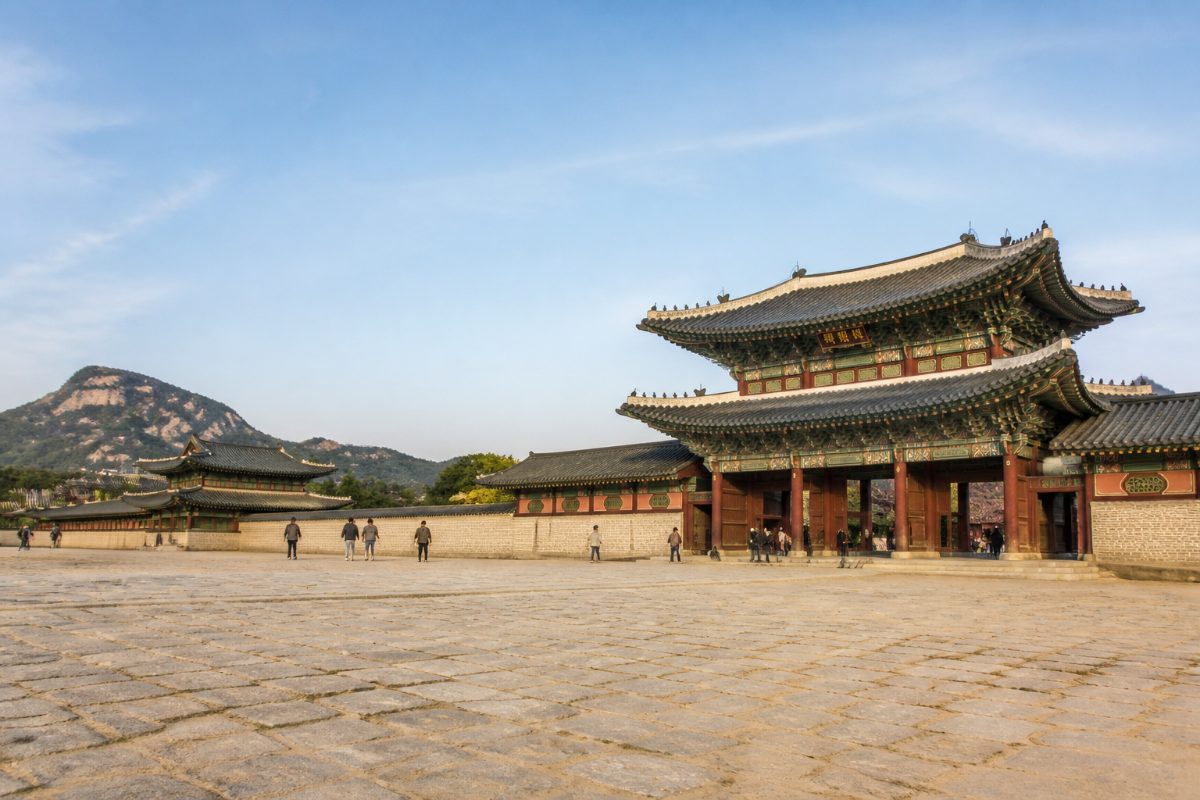
Save the full destination name and address together: Gyeongbokgung Palace (경복궁), 161 Sajik-ro, Jongno-gu, Seoul. Gyeongbokgung Station on Line 3 is a useful approach, but the station and the palace entrance are not the same place. Check the final walking segment in your map app so you can see which side of the palace your route reaches.
Gwanghwamun is the palace’s main gate; Gwanghwamun Station is a separate transit landmark. If you are meeting someone, agree on a specific visible spot and say whether you mean outside the palace or beyond the ticket area. A station name alone may not be enough to identify the meeting point.
Check the route before you leave, particularly if you have arranged a hanbok rental or tour near a particular gate. Keep the meeting point, rental details and route together on your phone so you do not have to reconstruct the plan after arriving. Our NAVER Map guide covers how to verify a destination and compare the last part of a route.
A simple route through the palace grounds
This is a suggested sightseeing sequence, not an official tour or an accessibility route. Follow the signs for open visitor areas and adjust the walk to your interests and energy.
Start at Gwanghwamun and follow the courtyards
If Gwanghwamun suits your arrival route, begin there and follow the on-site entrance and ticket signs. Move through the gates and courtyards at a pace that lets you notice how each opening leads into the next space. Looking back occasionally can help you appreciate the view through the gate you have just crossed.
Spend time around Geunjeongjeon
Geunjeongjeon is the palace’s throne hall and one of the central highlights for a first visit. Instead of taking one quick photograph and moving on, look at the building in the context of the courtyard around it. A wide view gives you the scale of the space; a closer look lets you choose architectural details that interest you.
Continue toward Gyeonghoeru and the pond
Gyeonghoeru stands beside a pond northwest of Geunjeongjeon and was used as a venue for royal banquets. Its waterside setting offers a change of pace from the central courtyard, so leave time to look at the pavilion and its relationship to the surrounding landscape. If access to a particular area is important to your plans, check the current visitor arrangements rather than assuming that the general palace ticket includes every activity.
Choose your final stop based on how much time and energy you have left. If the group is tired, finish with the places you most wanted to see instead of extending the walk just to complete a list. Before heading farther into the grounds, consider how you will return to your exit, rental return point or next destination.
Hanbok rentals and guided tours: what to decide first
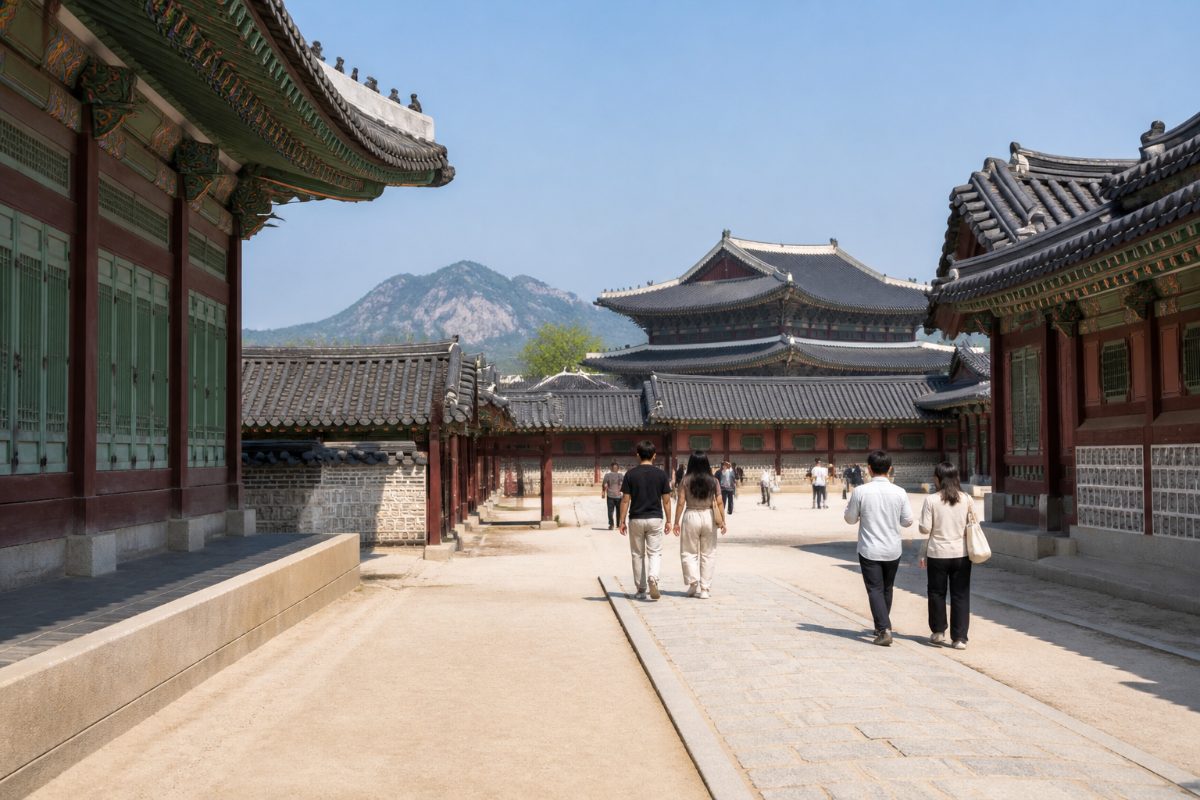
Hanbok can make the visit more focused on dressing up and taking photos, which may be exactly what you want. It can also add decisions and time to a morning planned around a long walk or historical interpretation. Compare the rental cost and schedule with the standard admission price of ₩3,000; the ticket price is only one part of the decision.
Before paying a rental shop, ask what the price includes, how the return time is calculated, where your belongings can be kept and what the shop’s late-return terms are. Rental conditions are set by the shop, so do not assume that nearby shops use identical arrangements. Choose footwear and layers that suit both the day’s weather and the amount of walking you expect to do.
A guided tour makes sense if learning about the buildings matters more to you than choosing every stop and photo opportunity yourself. Check the tour’s language, meeting point, participation rules and current departure time before setting the rest of your day around it. Bon Traveler recommends booking guided tours at least two weeks ahead; use the current tour operator information to confirm availability and booking details.
Try to avoid stacking every extra into one morning. A tour, a rental return, a photo session and a meal can all compete for the same hours. Pick one time-sensitive activity, build the walk around it and leave the rest flexible. If the weather affects your comfort outdoors, make that decision before committing to a closely timed rental or tour.
- Use the current opening notice for the date you plan to visit, especially around a public holiday.
- Keep the admission cutoff separate from your arrival plan; entering at the last admission time leaves little room for a relaxed walk.
- Choose one main activity to anchor the morning rather than scheduling several timed extras.
- Save the address, route, meeting point and any confirmed rental or tour details together.
- VISITKOREA — Gyeongbokgung Palace, address, seasonal hours and admission
- Visit Korean Heritage Campaign — Royalty Route, palace layout and building roles
- Royal Palaces and Tombs Center — Gyeongbokgung official visitor information and notices
References
- 23 Incredible Things to Do in Seoul, South Korea: A First Timer's Guide - Bon Traveler
- Everything You Need to Know Before Your First Visit to Seoul | Travelling With Nikki
- Gyeongbokgung Palace (경복궁)- VISITKOREA
- Best Time to Visit Gyeongbokgung Palace | Seasonal Guide
Information in this post was checked as of November 2026. Policies and prices may change, so please verify important details with official sources.


Comments
Post a Comment