Getting Around Seoul in Snow: Subway, Bus & Taxi
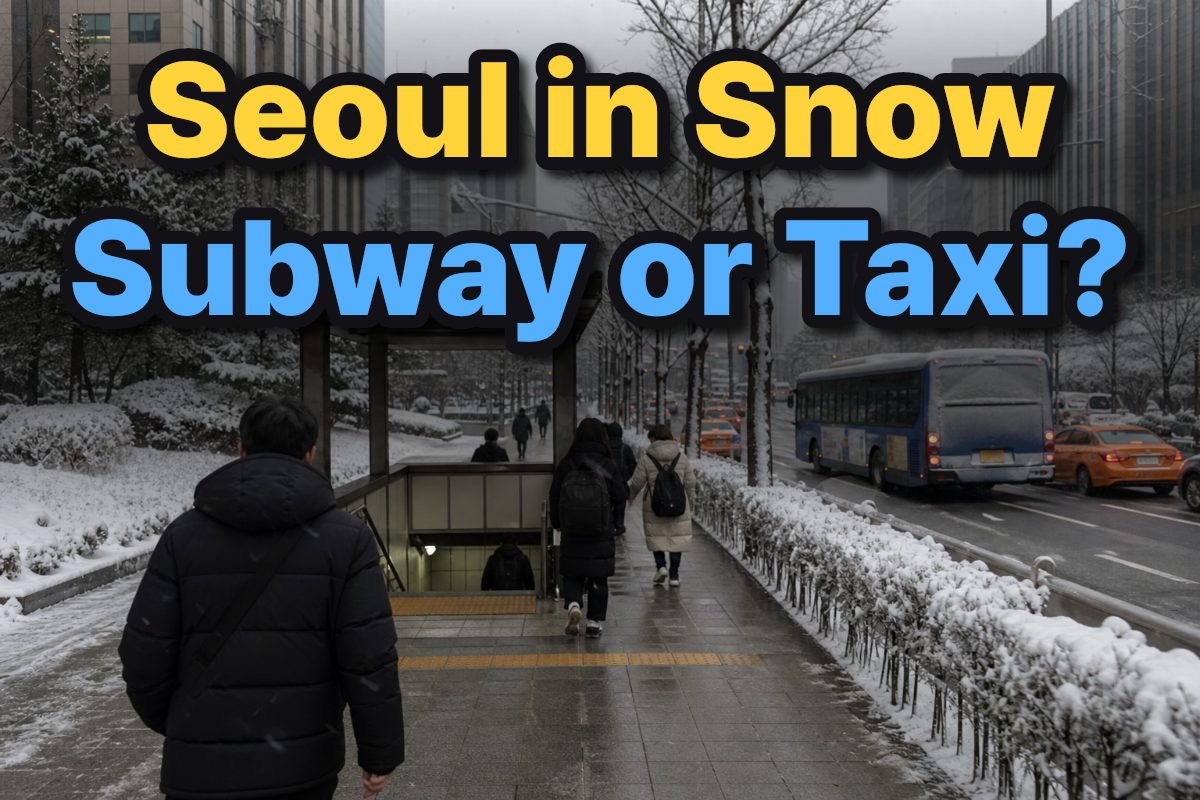
When snow slows Seoul’s roads, start by comparing the subway with road-based options. A short walk to and from stations favors the subway; if you need to reduce the walk to your destination entrance, compare a bus or taxi and allow for road traffic. This is the practical starting point for getting around Seoul in snow.
Key Takeaways
- The subway avoids street traffic, but include outdoor walks and transfers when comparing routes.
- Buses and taxis use roads, so a short-looking ride may still be affected by traffic.
- A rechargeable T-money card works on subways and buses; the 2024 guide says reloading requires cash.
- Wear shoes with good traction and save your destination in a map app before heading out.
Table of Contents
How should you choose a route in snowy Seoul?
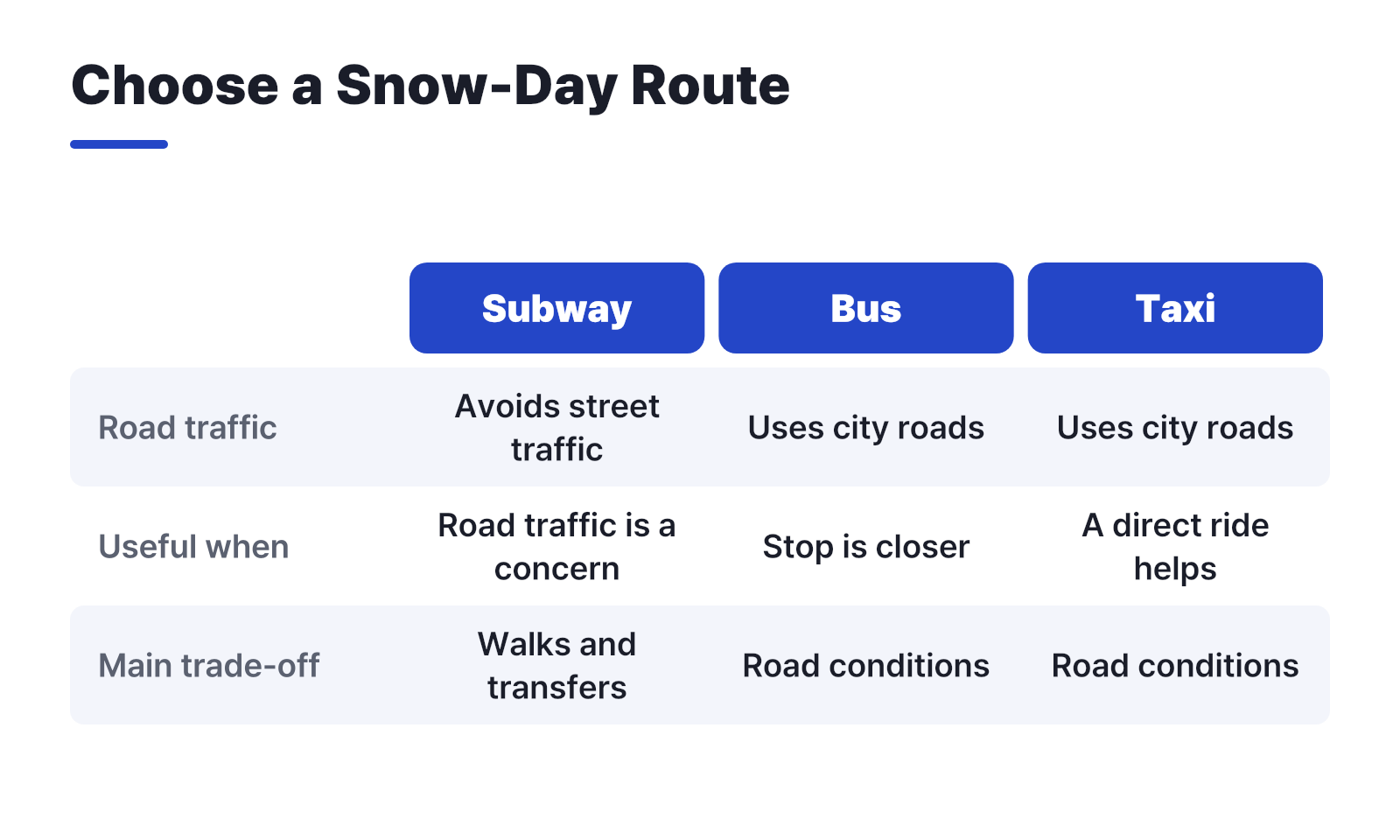
Choose a route by comparing the complete trip: the walk to the first stop, the ride, any transfer, and the walk at the other end. The subway avoids street traffic, while buses and taxis use roads. When snow affects road travel, a subway route is a useful first comparison, but a closer bus stop or taxi drop-off can reduce exposed walking.
Do not compare only the minutes shown for the ride. A route with a subway transfer and a long walk outside may be less convenient than a road-based option that stops nearer your destination. Conversely, a direct-looking bus or taxi trip still depends on road conditions. Think about which part of the journey you most want to shorten: time in traffic, outdoor walking, or transfers.
For example, if your day includes Myeongdong and Gyeongbokgung Palace, enter each destination separately in your map app and compare the available transit and walking directions. The useful question is not simply which attraction is farther away. Check how much walking each option adds at both ends, and whether the route depends on a road trip or a subway ride.
Use a map app that gives directions for the mode you are considering. NAVER Map provides public-transit, walking, and driving directions. A Seoul travel guide describes Google Maps as useful for public-transit directions, while its walking and driving directions are limited in Korea. Save the Korean address as well as the English place name when you have it; the Korean name or address can help identify a location in a navigation app.
When is the subway the better choice?
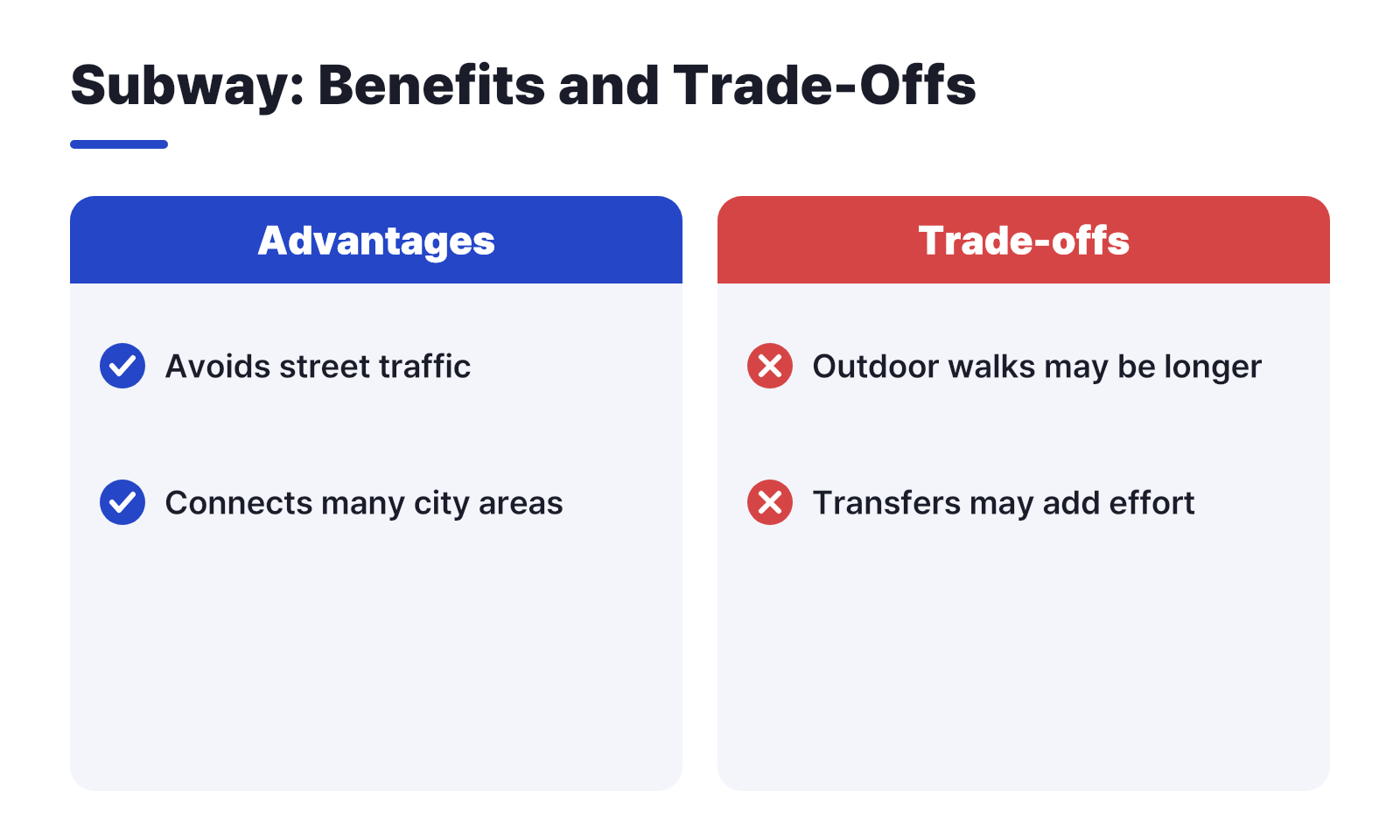
The subway is usually the most direct option to consider when road traffic is the main concern and both ends of your trip are near stations. Seoul’s subway lines are color-coded, and the network links many parts of the city. Check the station names and transfer points before entering so you can follow the route in the correct direction.
For a snowy-day trip, look at the walking legs as carefully as the line changes. A station may be convenient for one destination entrance but leave a longer walk to another. If you are carrying shopping bags or visiting several places, compare the full set of walks rather than assuming the nearest station on a map is the easiest exit point.
A rechargeable T-money card can be used for subway and bus rides. The 2024 SAC Korea guide says you can buy one at a subway station or convenience store and reload it with cash. Tap the card when entering and when leaving the subway; the guide also notes that fares depend on distance traveled.
Keep the card somewhere easy to reach before you reach the fare gate, and avoid putting it away between the entry and exit taps. Subway cars also have seats designated for older adults, disabled passengers, and pregnant passengers, usually at the ends of the car and often in a different color. Leave those seats available for the passengers they are intended to serve.
Should you take a bus or taxi?
Choose a bus when its route brings you closer to your destination than the subway does and the road portion suits your plans. Choose a taxi when a direct ride or a shorter walk is especially useful. Both use city roads, so neither should be assumed to bypass snow-related traffic.
Before boarding a bus, compare the route and stop names in your map app. Confirm that the stop matches your direction of travel; a stop with a familiar street name may be on the opposite side of the road. Tap your T-money card when boarding and again when getting off. The same card can cover a trip that combines bus and subway, and the 2024 guide says cash is needed to reload it.
A bus with fewer stops is not automatically faster in snow. Compare the whole journey with a subway option, including the walk to each stop and any transfer. If the bus route involves a long stretch on roads, the subway may be the more predictable choice for avoiding street traffic.
A taxi can help when a station is far from your entrance or when walking between stops would be uncomfortable. Kakao T is named in winter travel guidance as a taxi app option. Enter the destination carefully and keep its address available, especially if an English place name does not identify the location you intend.
T-money may be accepted in taxis, but the 2024 guide describes taxi use as something that is available only sometimes. Do not assume every taxi will take it. If payment method matters to your plan, check the option for the ride you arrange; for more on app bookings and the ride itself, see Korean Taxi Apps, Meter Checks, and the Door Detail to Remember.
What should you wear and check before heading out?
Wear layers you can adjust indoors, a coat that protects you from wet snow, and shoes with good traction. Snow can make the walk between a station, bus stop, and entrance more demanding than the ride itself, so choose footwear for the outdoor parts of your route rather than only for the weather at your hotel door.
Keep your phone and T-money card accessible without needing to stop in the middle of a crowded walkway. Gloves can make waiting outdoors more comfortable, while a charged phone lets you reopen your route if you need to switch from bus to subway or look for a different stop. These small preparations are especially helpful when you are navigating an unfamiliar neighborhood.
Before leaving, review current service information for the subway line or bus route you plan to take. Recheck the route if conditions change while you are out. A map itinerary shows a proposed journey; a current service notice can help you decide whether that journey still fits the day.
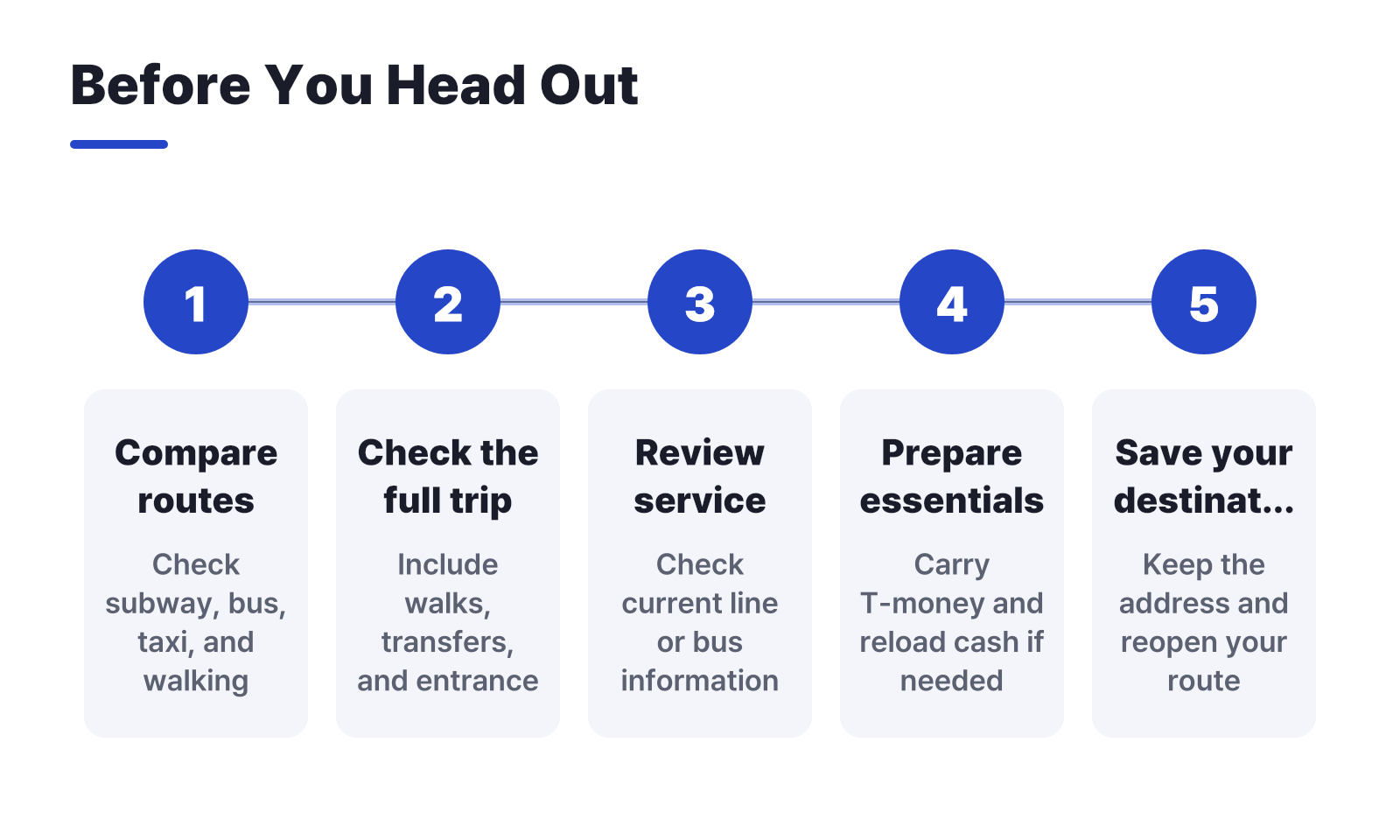
- Enter the exact destination in your map app and compare subway, bus, taxi, and walking options.
- Include outdoor walks, transfers, and the location of the entrance you need.
- Check current service information for the line or bus route you plan to use.
- Carry your T-money card for subway and bus travel, and cash if you need to reload it.
- Save the address and reopen the route if you switch transport modes.
For directions in English, the related guide NAVER Map in English: Find Your Hotel, Train and Exit in Korea covers using the app for transit and navigation.
Wrap-Up
For getting around Seoul in snow, compare the subway first when you want to avoid road traffic, then choose a bus or taxi if it meaningfully shortens the outdoor walk. Save your destination, check the full route and current service information, and dress for the time you will spend outside between stops.
References
- 2024 SAC Korea Unofficial Guide - Light Fellowship
- [PDF] GUIDEBOOK for International Students - Study in Korea
- Seoul Travel Guide: Everything To Know For Your First Visit
- A Guide to Winter in Korea: Survival Tips – there she goes again
Information in this post was checked as of November 2026. Policies and prices may change, so please verify important details with official sources.


Comments
Post a Comment