Hallasan winter hiking trail closures and reservations
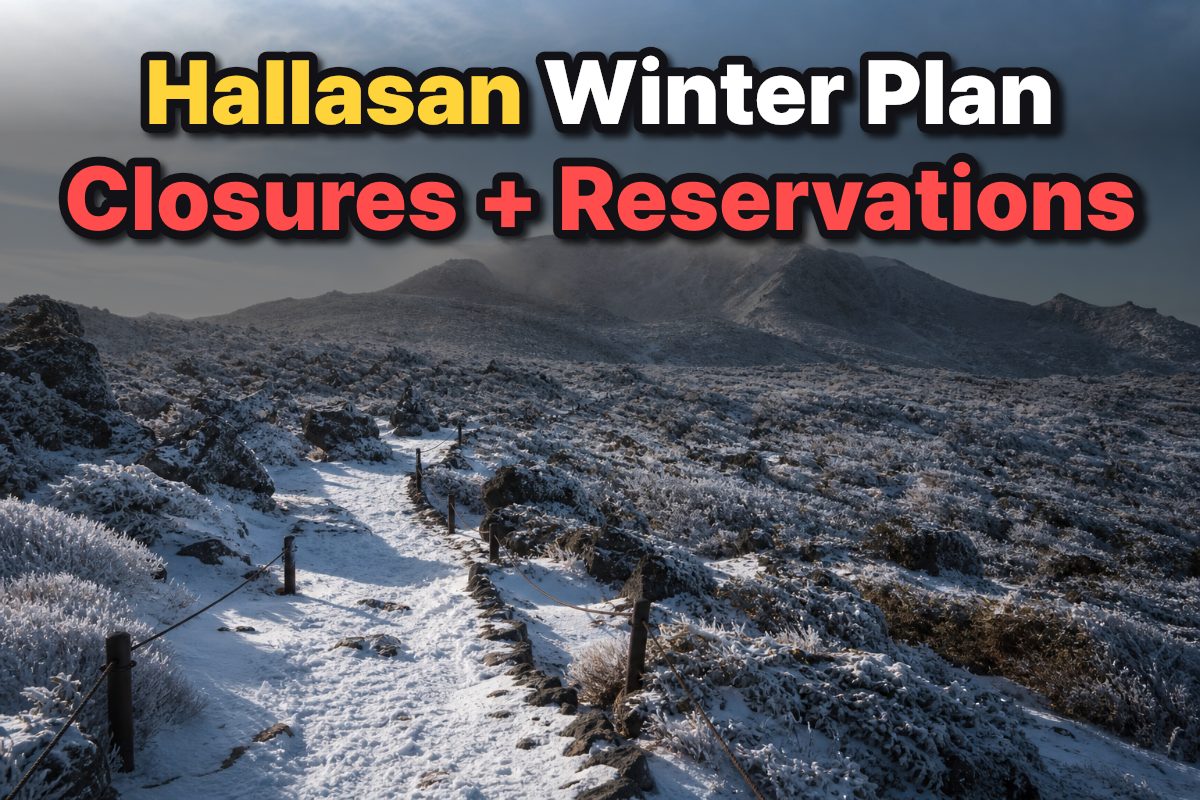
For Hallasan winter hiking trail closures and reservations, check the status of your exact trail and date before setting out. Seongpanak (성판악) and Gwaneumsa (관음사) are the two routes to Baengnokdam at the summit; reservation requirements and temporary access rules can change, so use the current reservation system rather than an old trip report. The system also has a Usage fee section for checking current charges.
Key Takeaways
- Check the live status and latest notices for your chosen Hallasan trail close to your hiking day.
- Seongpanak and Gwaneumsa reach the summit; check the system for reservation requirements for your specific date.
- Eorimok, Yeongsil, and Donnaeko do not reach the summit, and their current access status still needs checking.
- Use the official Usage fee section to check current costs, then budget separately for transport, food, water, and winter gear.
Table of Contents
Which Hallasan trails need reservations?
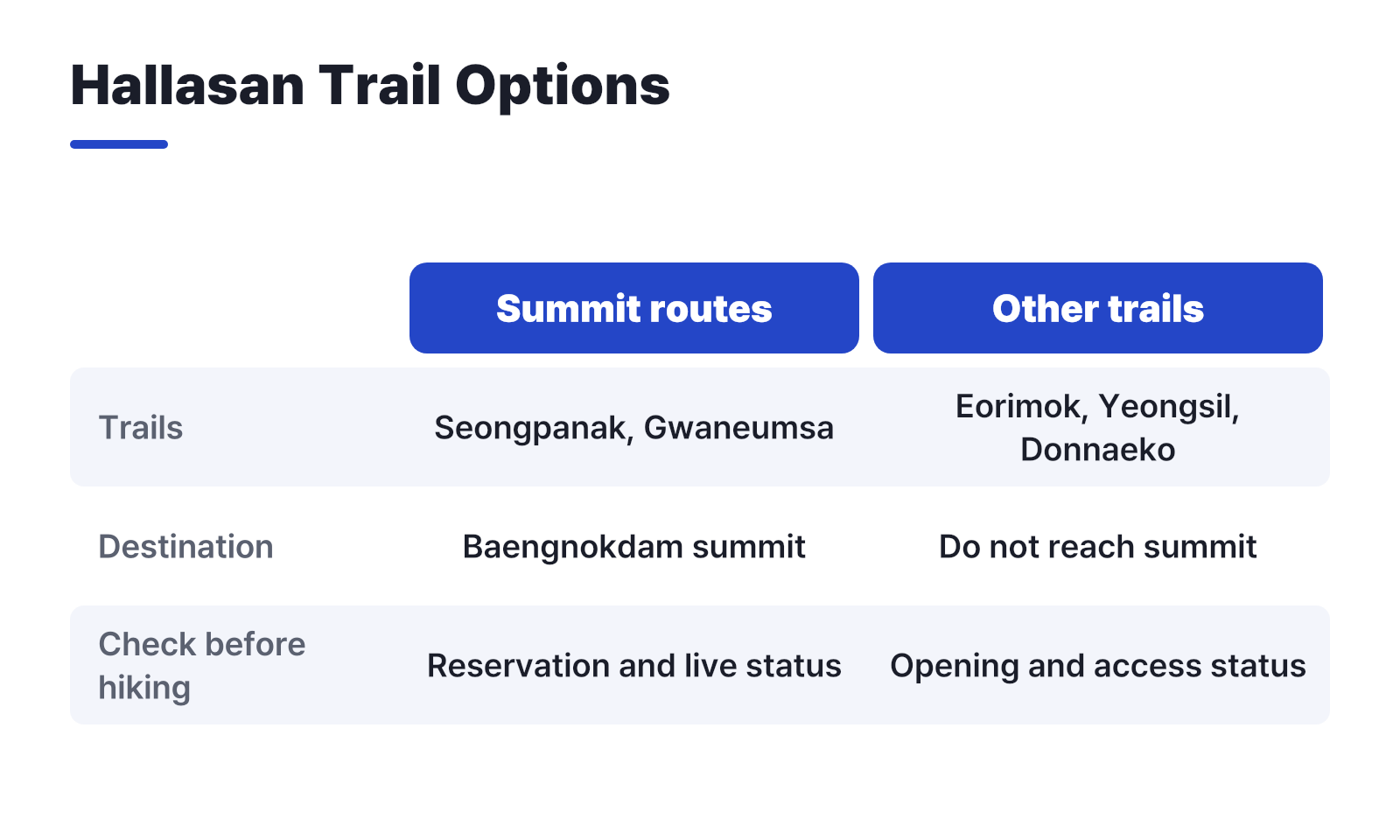
Seongpanak and Gwaneumsa are the Hallasan summit routes, and the Hallasan Visit Reservation System lists both with reservation access. For a particular winter date, check whether a reservation is required or available in the system; a past reservation-free period does not determine the rule for a new date.
Eorimok (어리목), Yeongsil (영실), and Donnaeko (돈내코) do not reach Baengnokdam. A non-summit hike avoids the summit-route reservation question, but it does not guarantee that the selected trail is open or free of access restrictions.
| Trail | Destination | What to check |
|---|---|---|
| Seongpanak (성판악) | Baengnokdam summit | Reservation status and live trail information |
| Gwaneumsa (관음사) | Baengnokdam summit | Reservation status and live trail information |
| Eorimok (어리목) | Does not reach the summit | Current opening and access information |
| Yeongsil (영실) | Does not reach the summit | Current opening and access information |
| Donnaeko (돈내코) | Does not reach the summit | Current opening and access information |
The practical choice depends on your goal. If Baengnokdam is essential, compare the reservation status and trail conditions for Seongpanak and Gwaneumsa. If reaching the summit is not your goal, look at the current status of the other three trails instead of treating them as alternate ways to the peak.
How to check winter closures and live trail status
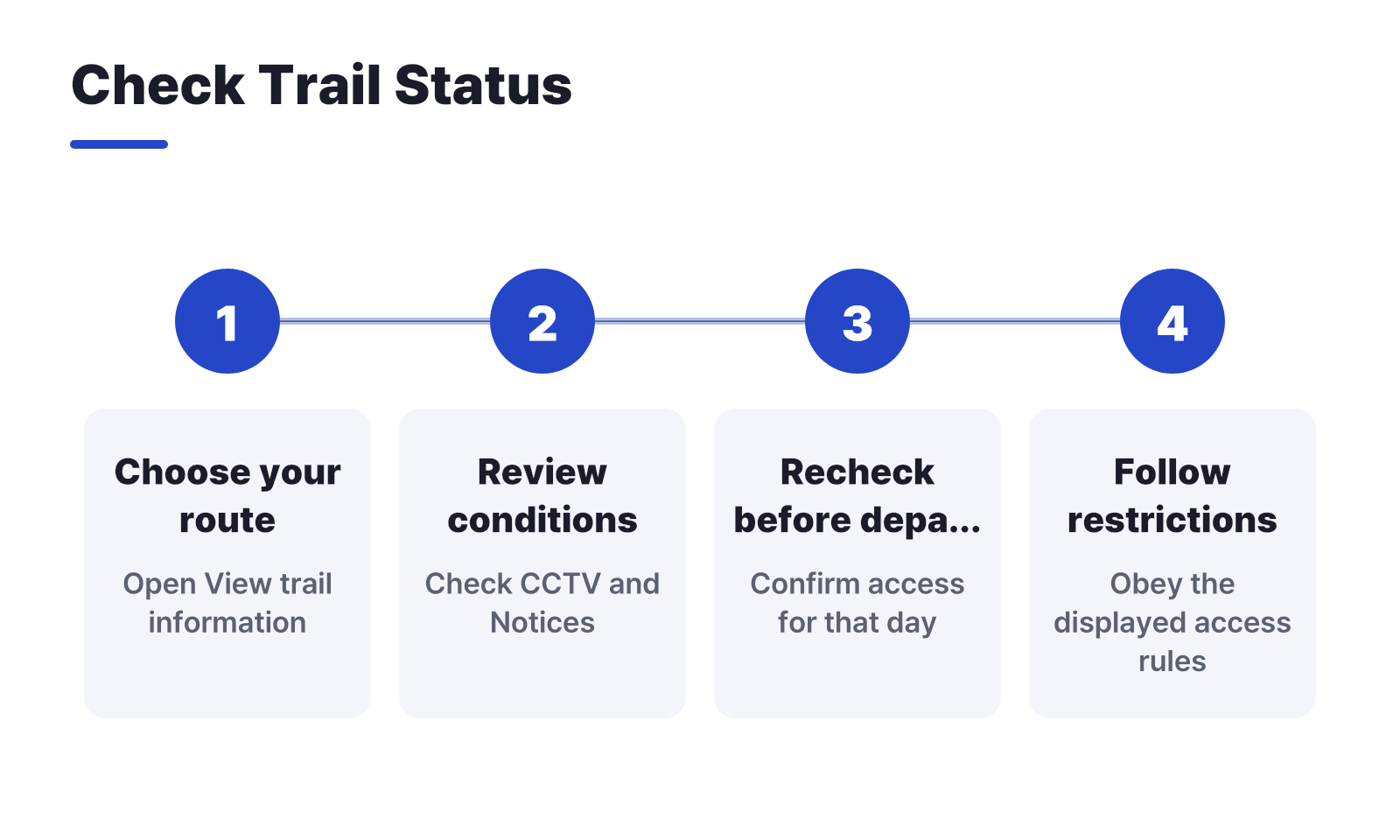
Hallasan winter closures are date- and condition-specific, so check the selected trail’s live information and the latest notices before travel. The reservation system provides “View trail information,” “View real time CCTV,” and “Notices,” which cover current trail conditions and policy announcements.
- Open the Hallasan Visit Reservation System and select “View trail information” for your intended route.
- Review “View real time CCTV” for a visual update, then read “Notices” for closure or reservation changes.
- Check the same trail again close to departure, because a reservation does not guarantee that access will remain open if conditions change.
- Before leaving for the trailhead, confirm the status once more and follow any access restriction shown for that day.
A notice from an earlier season is not a reliable guide to a later winter. For example, the official system posted a temporary reservation suspension for November 27 through December 27, 2024, and later listed a notice about adjusting the reservation section dated May 12, 2025. Those dated notices show why you should look for a notice that actually covers your planned date.
Weather warnings can restrict access, and winter conditions can affect whether a route is operating. Use the current trail information and notices together; a trail’s normal operating status or an available reservation alone does not settle whether you can hike it on the day.
How to reserve a summit hike and check entry rules
For a summit hike, use the reservation system’s “Reservation guide,” “Reservation,” and “Reservation status” sections for your chosen route and date. The system separates booking information from trail operation, so check both before travel and read the current guide for application, entry, and cancellation instructions.
- Select “Reservation guide” and review the process and current conditions displayed for summit hikes.
- Open “Reservation” and look for Seongpanak or Gwaneumsa on your intended date.
- Use “Reservation status” to confirm the booking information, then check “View trail information” for the route’s operating status.
- Read “Notices” and the system’s FAQ for any temporary changes, entry instructions, or cancellation steps that apply to your booking.
Do not assume that an old reservation process, confirmation format, or cancellation rule still applies. Follow the instructions currently shown for your date, and keep the booking details available when you go to the trailhead. If the reservation page and trail-status page give different practical signals, treat them as separate checks: one concerns booking, while the other concerns access.
The system offers English-language service. Its reservation inquiry number is 064-713-9953; listed phone hours are weekdays from 9:00 a.m. to 5:30 p.m. Korea Standard Time, with a lunch break from noon to 1:00 p.m.
What does a Hallasan winter hike cost?
Use the reservation system’s “Usage fee” section to check current park-related charges; the available information here does not support quoting a current amount in Korean won or U.S. dollars. A reservation-free period is a booking policy, not proof that every other trip cost is zero, so do not build a budget from an old fee claim.
Separate any park-related charge from the costs of getting to and from your trailhead, carrying food and water, and obtaining winter equipment you need. There are no stores along the routes, so plan to bring food and water with you rather than relying on a trail-side purchase.
| Budget item | What to do |
|---|---|
| Park or use fee | Check “Usage fee” in the reservation system for the current amount and conditions. |
| Reservation | Check the route and date in “Reservation”; do not assume a previous policy applies. |
| Transportation | Price the trip to the selected trailhead and your return after the hike. |
| Food and water | Bring what you need before arriving; there are no stores along the routes. |
| Winter equipment | Assess your existing gear against the snow and cold conditions before deciding what to buy or rent. |
Transport can also affect route choice. A route guide recommends Seongpanak for hikers planning to take a bus or taxi after descending; it notes that buses from Gwaneumsa run at long intervals and that finding a taxi there can be difficult without arranging one ahead. Treat this as a planning consideration, and check your return option for the specific day rather than assuming service will match your schedule.
Winter access times and preparation
Hallasan hikes are planned as same-day outings, and winter brings shorter daylight, cold conditions, and strong winds near the summit. Follow the access schedule shown for your route and date, and plan your descent around the posted cutoff times rather than relying on a schedule from another season.
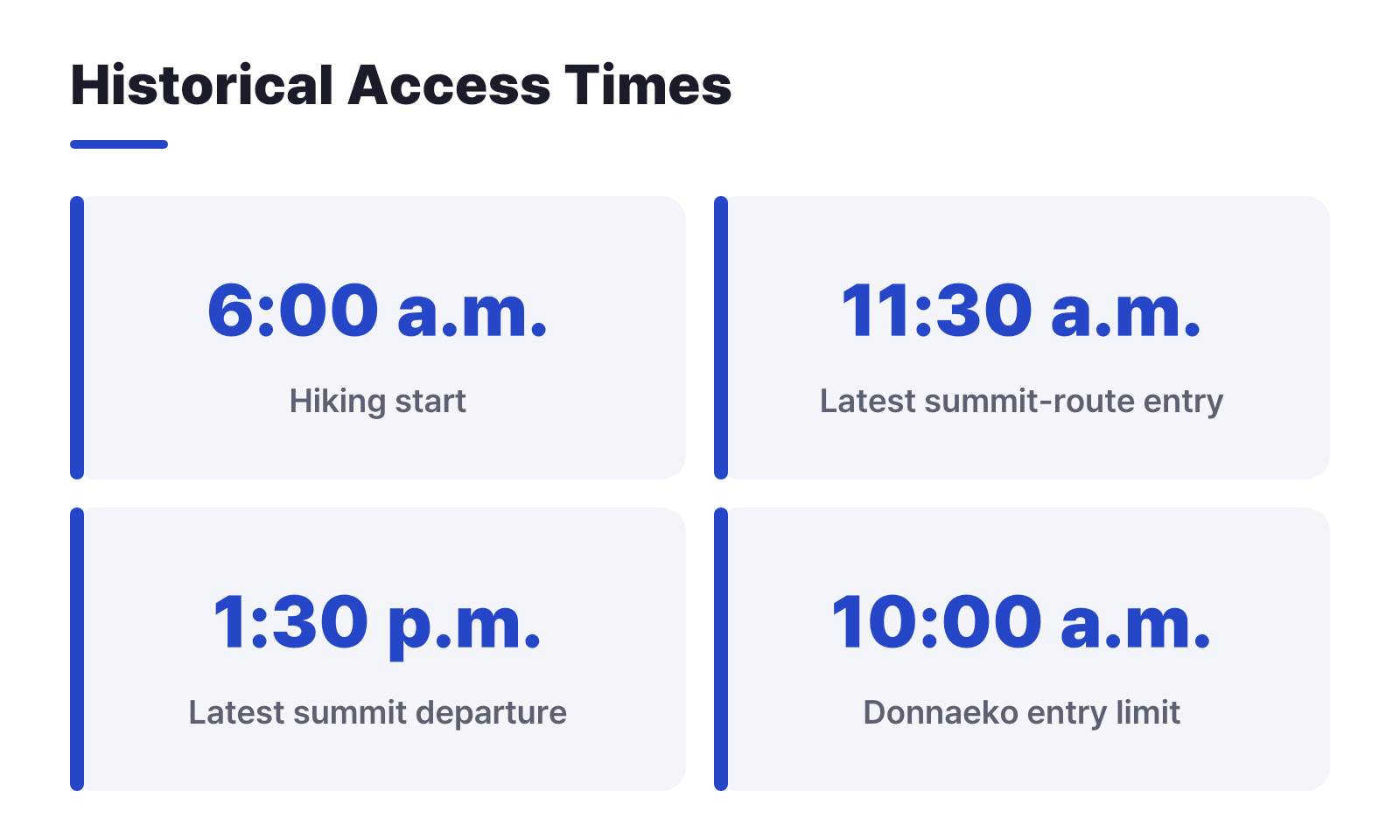
Published timing details can be date-specific. During a reservation-free period reported in 2024, The Korea Herald reported a 6:00 a.m. hiking start, an 11:30 a.m. latest entry for Seongpanak and Gwaneumsa, a 1:30 p.m. latest departure from the summit, and a 10:00 a.m. entry limit for Donnaeko. These are historical figures, not a schedule to apply to a winter hike in 2026; check the current system for the times tied to your date.
Winter hiking guidance also calls for preparation for cold and snow; crampons may be needed in winter conditions. Check the live conditions and make sure your footwear and cold-weather clothing suit the route before setting out. If the trail is closed or access is restricted, do not continue beyond the restriction.
Final check before you go
On your hiking day, check the exact trail in “View trail information,” review “View real time CCTV” and the latest “Notices,” and confirm the reservation and current fee information if you are using a summit route. Then carry your food and water, confirm your return transport plan, and follow the access times displayed for that date.
For Hallasan winter hiking trail closures and reservations, the useful decision is date-specific: choose a summit route only when its reservation and operating status both fit your plan. Open the official system before you leave for the trailhead and follow the current instructions shown there.
References
- 한라산탐방 예약시스템
- Hallasan Hike & Reservation Guide: Trails to Jeju Summit | K-Hike
- Hallasan to welcome visitors now without trail reservations - The Korea Herald
- How To Hike Hallasan In Winter 2026–27: Jeju Island Snow Hiking
Information in this post was checked as of November 2026. Policies and prices may change, so please verify important details with official sources.


Comments
Post a Comment