Seoul Subways with Luggage: Best Exits with Elevators and Escalators Near Major Stations

Table of Contents
With luggage, the best Seoul subway exit is the one that keeps your route on step-free paths and brings you closest to your destination, not simply the exit with the lowest number. Seoul Subways with Luggage: Best Exits with Elevators and Escalators Near Major Stations is a route-planning problem: confirm the street exit, locate the elevator path, and budget separately for the ride and any bag storage.
How to choose a Seoul subway exit with luggage
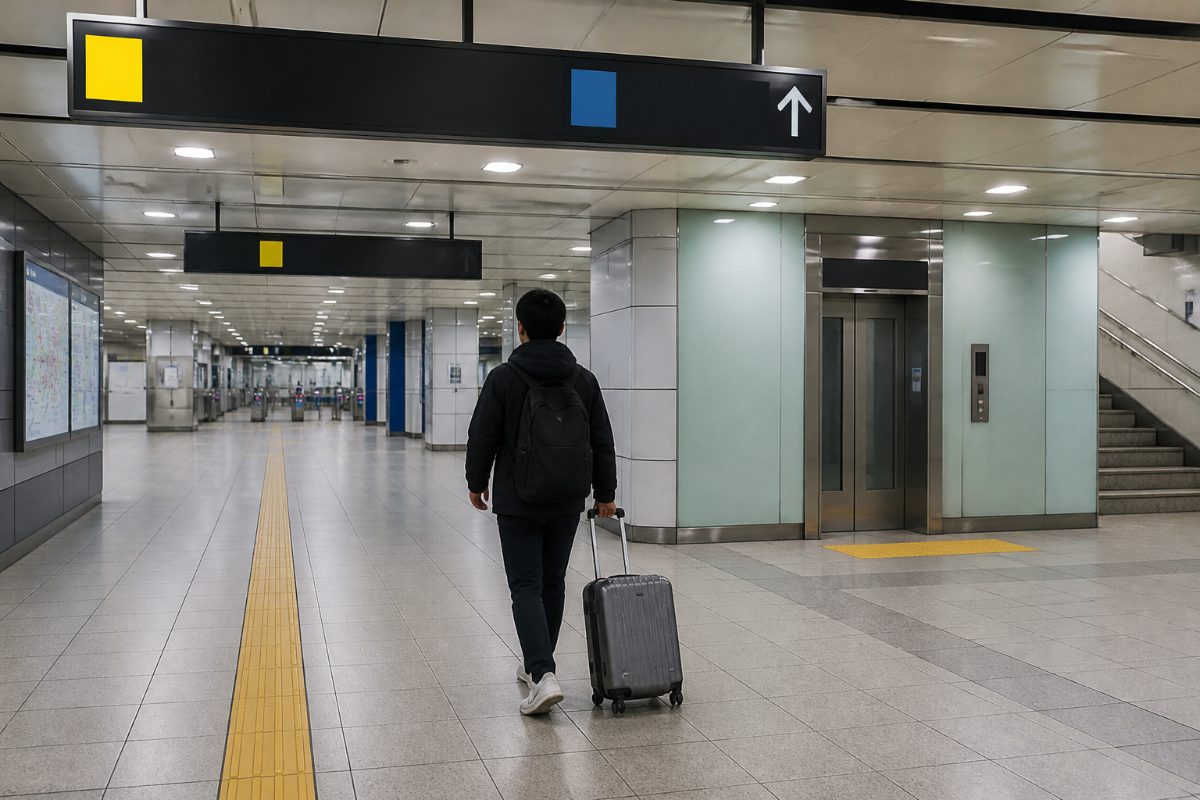
Choose an exit by matching your destination to its numbered street exit, then check whether the route includes an elevator or escalator. Large stations can have many exits, underground passages, and long transfers, so a route that looks short on a map may still involve substantial walking or stairs.
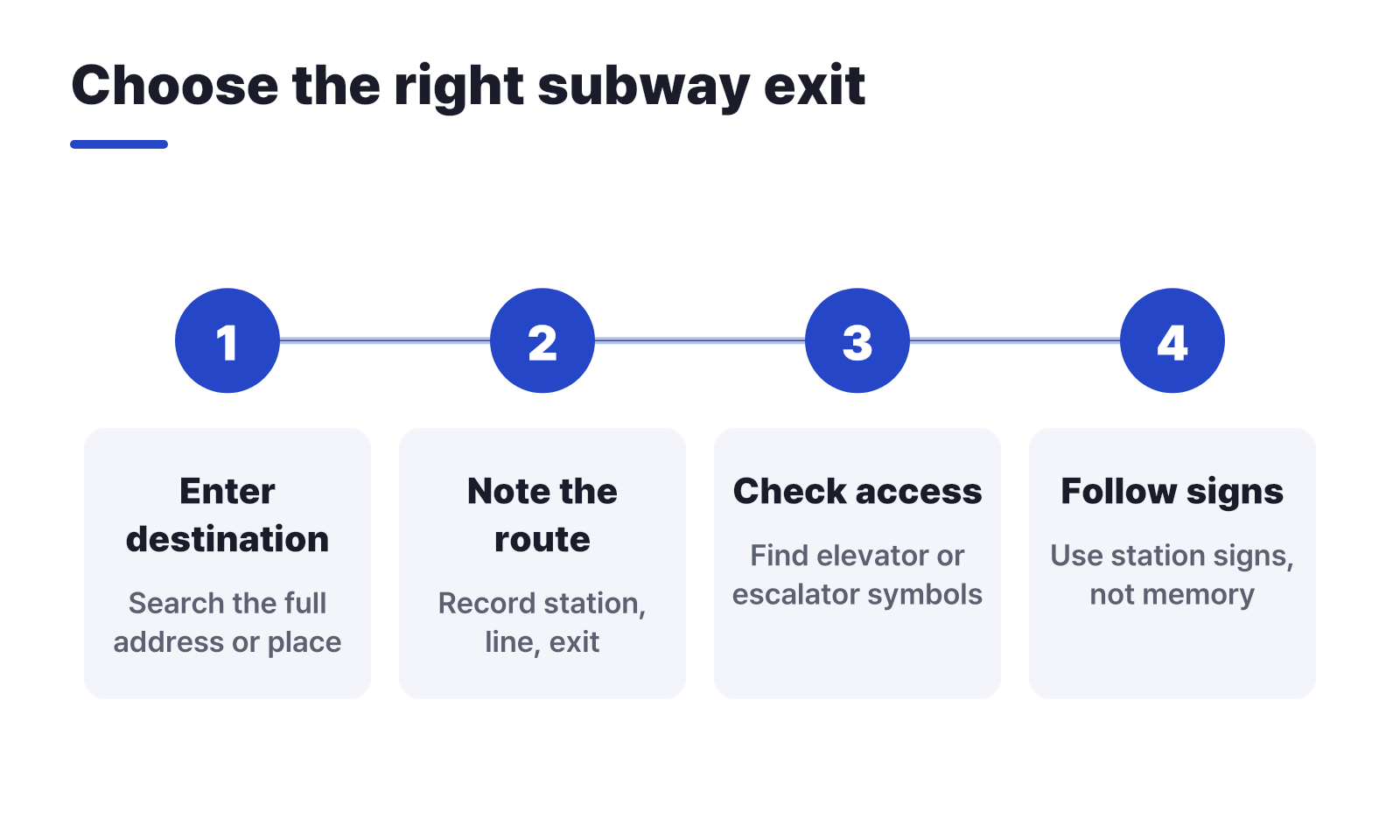
Before entering the station, search the exact destination in a map app and note the recommended exit. NAVER Map and KakaoMap can show exit recommendations for addresses, while station maps and signs help you confirm the number once you are underground. The exit closest to a building may not be the easiest one with a suitcase if its approach requires stairs.
- Enter the full destination address or place name in your map app.
- Record the station name, line, and recommended exit number.
- Look for elevator or escalator symbols on the station map and directional signs.
- At the station, follow signs for the exit and accessibility facilities rather than walking toward an exit number from memory.
- Before leaving the paid area, check the station map near the gates if you need to change to a different exit.
Exit numbers matter most at stations with several street approaches. A numbered exit identifies a particular route to the surface, and taking the wrong one can add an unnecessary walk or crossing. Keep the final address visible on your phone so you can compare street-level directions after exiting.
Where are the elevators, and how do you follow them?
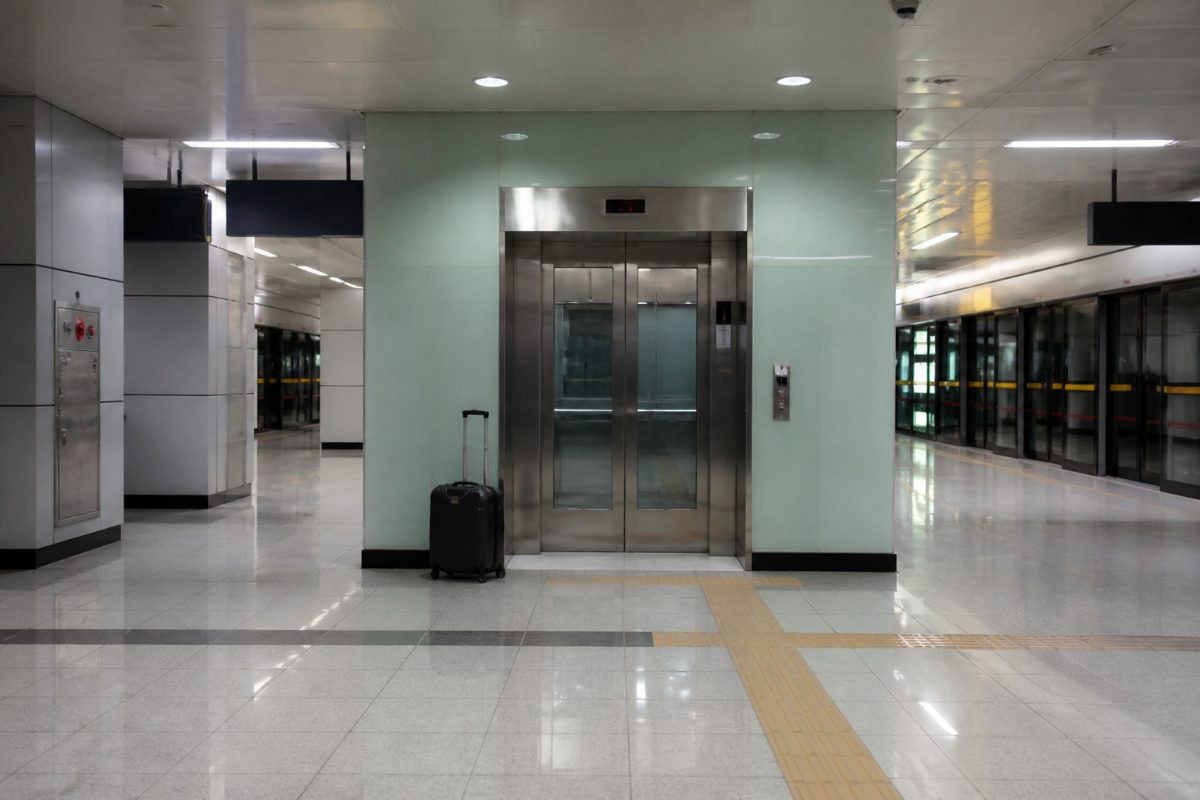
Nearly all Seoul subway stations can be reached by elevator, but the journey may involve more than one lift: one between street and ticketing level, followed by another between ticketing level and the platform. Elevator placement can be difficult to spot in older stations, so follow accessibility signs rather than assuming the lift is beside the nearest entrance.
The Official Travel Guide to Seoul describes elevators as the usual way to connect street level, ticketing level, and platform level in accessible stations. Some elevators are retrofits in older station layouts, which means the lift may sit away from the most obvious entrance or passage. At street level, look for elevator signs and the large glass elevator structures; inside, use station signs to trace the next segment.
- At street level, locate the elevator entrance before taking stairs down to a subway entrance.
- At the ticketing level, look for a second elevator route to the platform. Do not assume the street elevator continues all the way to the train.
- If an elevator has transit-card readers, it indicates that the lift travels up or down between paid and unpaid areas.
- At the platform, check the direction signs before boarding so you do not need to haul your bag through an additional transfer.
Use an escalator only when its direction and endpoint fit your route. An escalator can help with a heavy suitcase, but it may lead to a different passage or exit from the one your destination requires. For a large or awkward bag, an elevator route is easier to manage because you do not have to balance the suitcase on moving steps.
Allow for two elevator legs when planning a station route: street to ticketing, then ticketing to platform. A route planner showing an accessible station does not by itself identify the exact lift entrance at street level.
What does a luggage-friendly subway trip cost?
Plan for the subway fare as the cost of the ride, and treat storage or luggage delivery as a separate optional service. Elevator and escalator choices are part of station access; the extra costs to watch are paid storage or a bag-transfer service, whose prices depend on the provider and service selected.
Seoul subway fare figures can change, so use the current fare shown by a transit app or official transit information when estimating your trip. The materials available for this guide do not support a dependable fare quote for a particular origin, destination, or date, so avoid using an old online number as a trip budget. When comparing routes, enter the same start and end points in the same app and check the displayed fare before you travel.
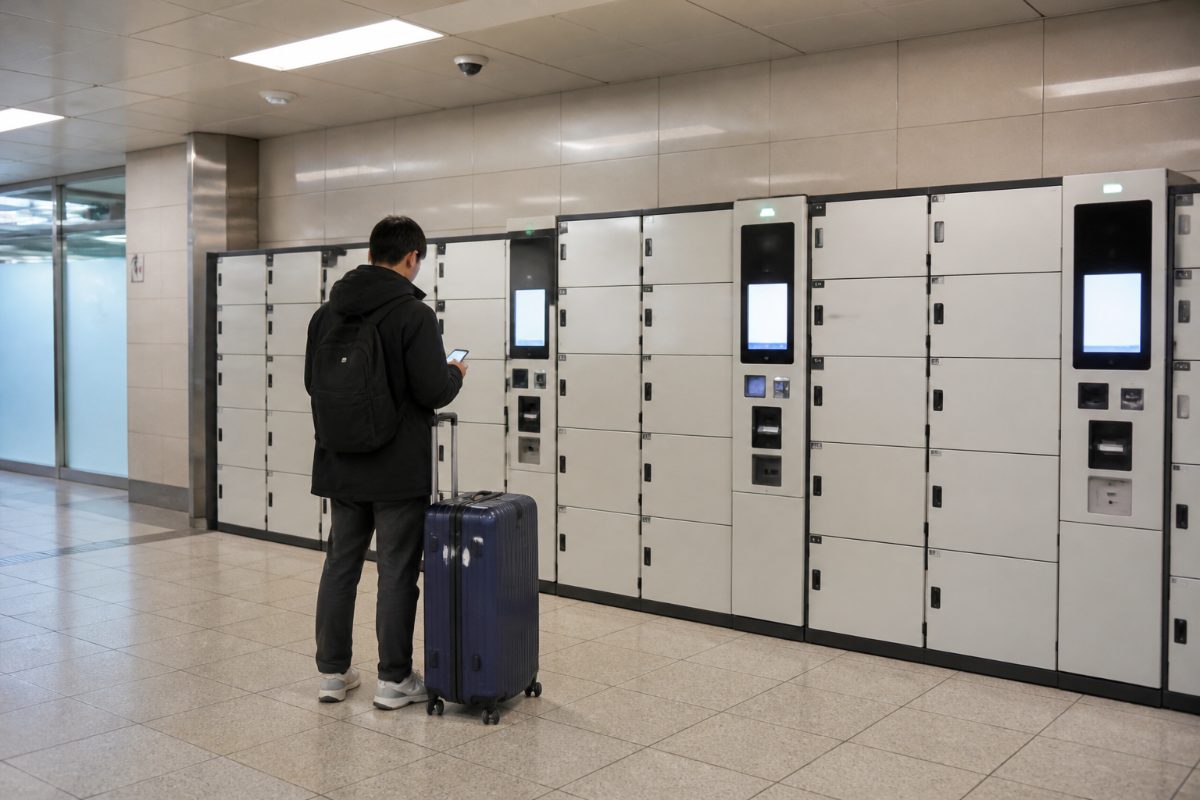
Station lockers are a separate cost from the subway ride. Locker sizes, payment options, fees, and storage limits depend on the locker operator; read the machine screen before choosing a locker. Some lockers accept a bank card or transit card, and some also take cash, so check the payment symbols on the particular machine instead of assuming every station has the same setup.
T-Luggage is a luggage storage and courier service described for Seoul Station, Hongik University Station, Myeong-dong Station, and Gimpo Airport Station. It operates on Seoul Metro Lines 1 through 9, with large lockers needed at the station; it also offers bag movement between those stations and Incheon Airport. Treat it as a separate paid service and confirm the current rate and availability for your exact station pair before building it into your budget.
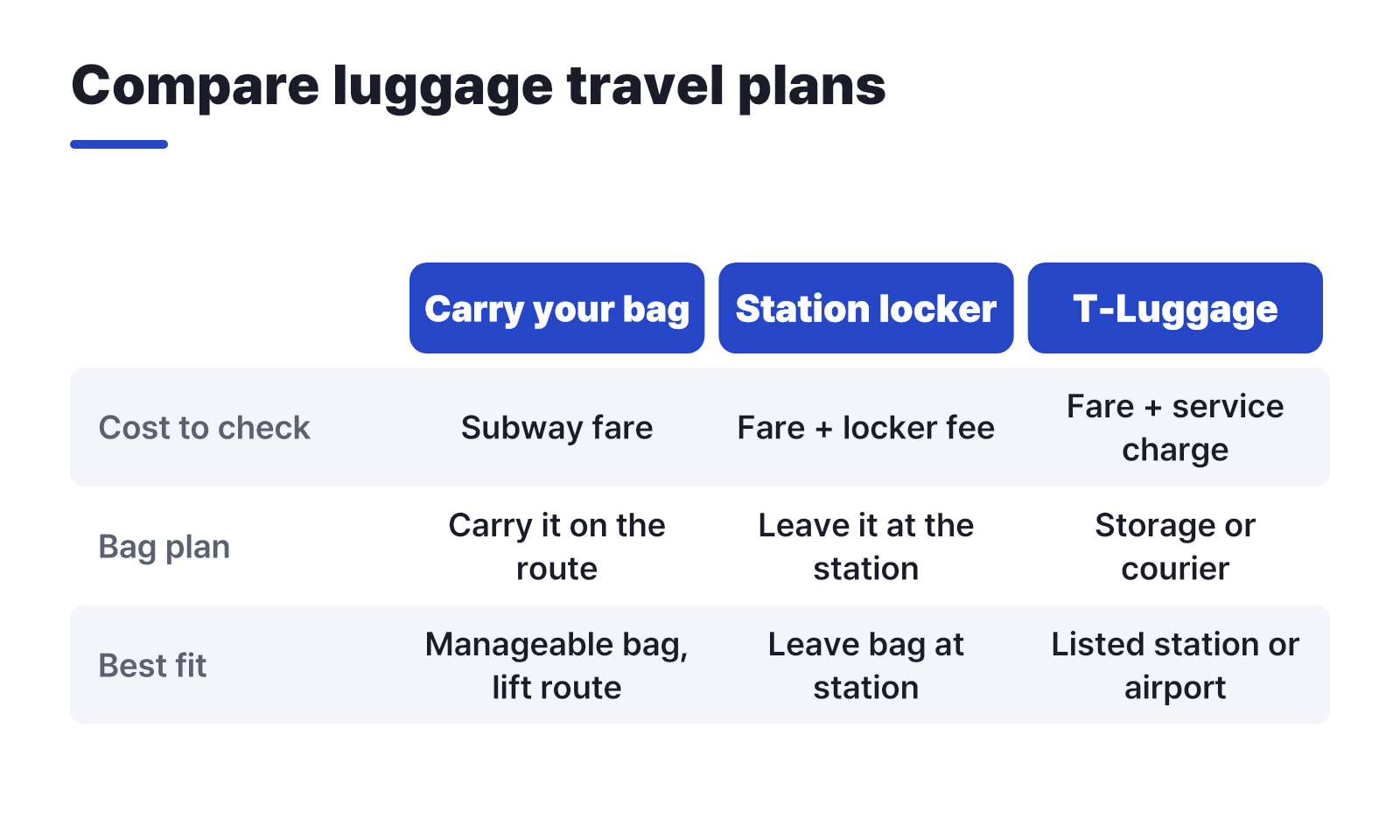
For a cost comparison, list the same three items for each plan: subway fare, any locker or delivery charge, and any extra transit trip needed to reach the storage point. A locker near your destination may cost less than carrying bags across town, but a remote pickup or drop-off can add another ride and more walking. Compare the complete route rather than the locker price alone.
| Plan | Cost items to check | Best fit |
|---|---|---|
| Carry your bag on the subway | Subway fare for your route | Your luggage is manageable and you can reach the destination by an elevator route. |
| Use a station locker | Subway fare plus the locker fee shown on the machine | You want to leave the bag at that station and the available locker fits it. |
| Use T-Luggage | Subway fare plus the current storage or courier charge | Your route connects with a listed staffed station or airport transfer service. |
How to reduce walking during transfers and at major stations
For a luggage-friendly transfer, prioritize fewer station changes and a clear elevator path over a small time saving. Seoul station complexes can include long corridors, multiple exits, and passages that do not appear as a simple straight line on a map, so a route with one extra train stop may be easier if it avoids a complicated transfer.
Check the full route before boarding, including the transfer station and the exit number at your destination. Station maps show exit numbers and nearby destinations; follow signs through the transfer passage and verify the next line before continuing. Avoid choosing a route solely because it has fewer minutes on the app when the interchange involves a large station and a suitcase.
At the destination station, stay on the concourse until you have identified the elevator route and the exit that matches your address. Going up to street level at the wrong exit can leave you on the other side of a major road or underground shopping area. If the signs list several exits, use the app's destination pin and the station's exit map together.
When you have more than one bag, a bulky suitcase, or limited time to transfer, leaving the station and taking a taxi for the final leg can be a practical alternative to navigating a long underground route. Compare the door-to-door convenience with the extra ride cost before choosing. For subway-only travel, keep bags close and avoid blocking passageways while reading signs.
Wrap-Up
For Seoul Subways with Luggage: Best Exits with Elevators and Escalators Near Major Stations, decide the numbered exit from your destination address, then trace the elevator route from street to ticketing level and onward to the platform. Before traveling, compare the fare and any storage charge separately, and save the destination exit in your map app so you can follow station signs without backtracking.
Before you leave, check the official station or transit information for any current elevator service notices, then keep the station name and exit number open on your phone as you travel.
References
- Seoul Metro: 24 lines, 650+ stations, fares from ₩1,550 and map
- Accessibility | The Official Travel Guide to Seoul
- Seoul Subway Guide: Lines, Fares, Cards & Routes | Holiday Korea
Information in this post was checked as of November 2026. Policies and prices may change, so please verify important details with official sources.


Comments
Post a Comment